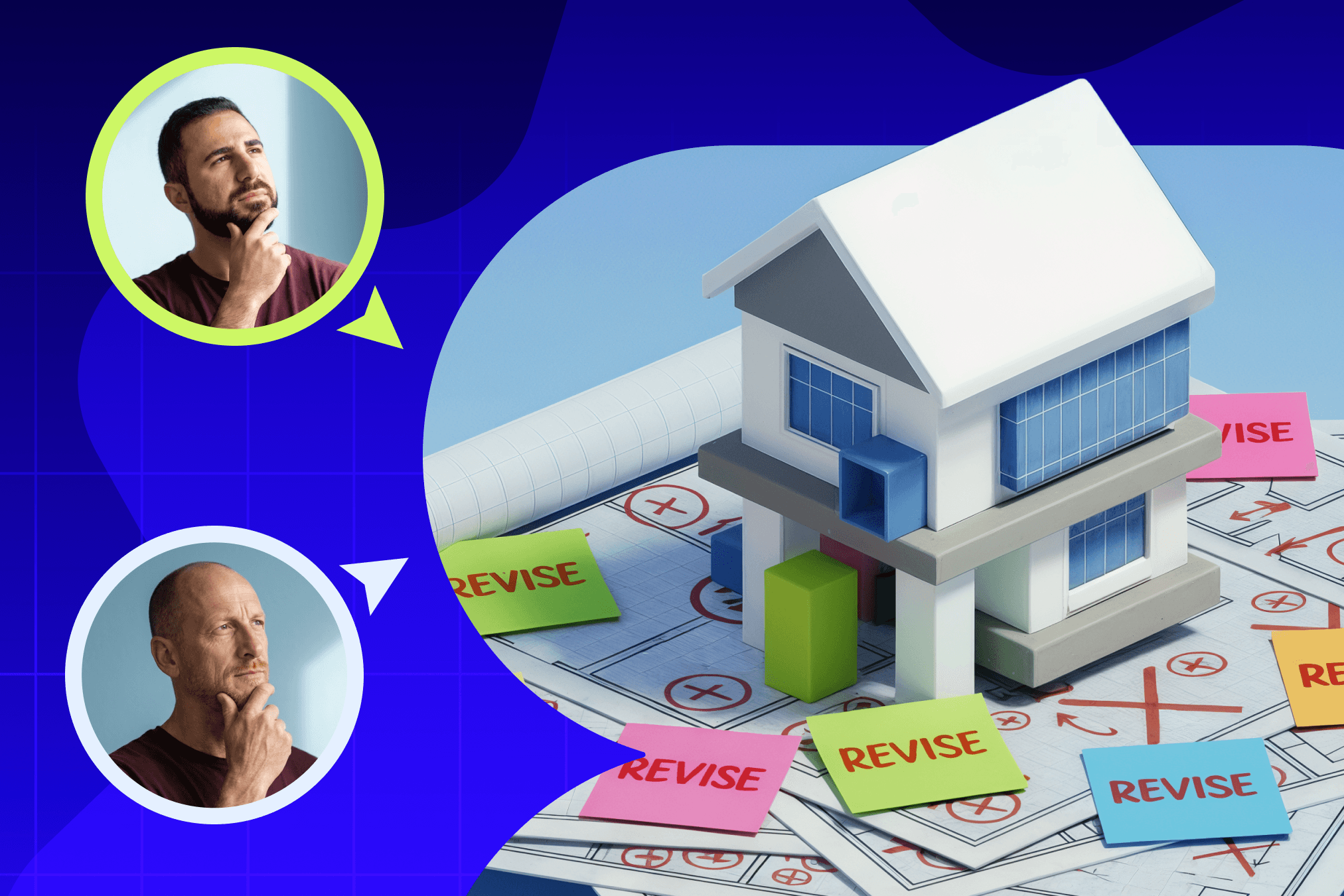
Cities are quietly changing who reads your plans first
I am Maor Greenberg, co-founder and CEO at Spacial.
Most of the AI conversation in AEC has been about what happens inside firms. New tools. New models. New experiments.
Lately, I have been paying more attention to what is happening on the public side. Cities and counties are starting to bring AI into the permit counter itself.
The Houston Chronicle recently reported that Harris County approved a two year pilot to add AI into parts of its building permit process. The idea is simple. An AI system would run automated pre checks on construction plans, flag obvious issues, and then pass them to staff for final review. County leaders pointed to Austin, where a similar pilot reportedly cut review times by about 50 percent.
At the same time, GovTech has covered how state and local governments are using AI together with GIS to fast track permits and make the process more transparent and searchable.
None of this is science fiction. It is meeting agendas, procurement documents, and real software pilots.
AI is slowly moving to the front door of permitting. Humans are still inside the room.
AI as filter, humans as decision makers
There are scary versions of this conversation where a black box silently approves or rejects projects. That is not what serious public agencies are talking about in these articles.
The approach looks more like this.
AI checks whether required documents are present.
AI looks for common issues and patterns, based on rules or past cases.
Obvious problems or missing pieces get flagged before staff start a full review.
Human reviewers still make the judgment calls and sign off.
One journalist described this as using AI to make permitting “less of a pain,” not less accountable. The goal is to shorten queues and free up time for real decisions, not to hand stamps to a model.
That is very similar to what strategic guides on AI in construction recommend for private firms. Use AI for issue detection, planning, and risk reduction. Keep people in charge of safety and approvals.
Why this matters if you draw, engineer, or build
If you are anywhere in the AEC world, this touches you in practical ways.
First, the definition of “complete” quietly shifts.
If an AI system runs the first pass, it will be very good at spotting missing documents, inconsistent information, or repeat mistakes. Sets that rely on someone at the city to fill in the gaps will hit more roadblocks.
Second, patterns begin to matter more than one off fixes.
AI is useful when the same issue shows up across many projects. If your firm has a habit of leaving certain details vague or burying key notes, that habit becomes more visible when automation is helping manage the queue.
Third, coordination stops being optional.
If public systems are looking across sheets, attachments, and forms, internal alignment matters. Conflicting information is the kind of thing both AI and humans will send back.
None of this is about perfection. It is about realizing that the front end of permitting is getting sharper. Upstream work will feel that eventually.
What I am watching from the Spacial side
At Spacial, we sit right in the bridge between design and approval. That is why I am watching these pilots closely.
Houston’s county engineers are exploring AI assisted checks to move plans faster without skipping safety. GovTech is highlighting cities where AI and GIS help residents understand where their applications stand. Strategy reports are telling firms to use AI for quality, not just visuals.
Taken together, they point in one direction.
If AI is on both sides of the table, quality in the middle cannot be an afterthought.
On the public side, AI filters out clearly incomplete or inconsistent submittals so reviewers can focus on judgment.
On our side, we use AI to help our engineers scan background plans, notice repeat issues, and keep city specific expectations in view while we coordinate structural, MEP, and energy. Licensed engineers still review, decide, and stamp every set that leaves Spacial.
The pattern is the same. Let AI find patterns and gaps. Let humans stay accountable.
Questions I think every team should be asking
I am not interested in telling every firm exactly what to do. Each team has its own constraints and priorities.
What I do think is helpful is a short list of questions.
If an AI checker looked at your last permit set, would it see one clear story or several conflicting ones.
Are local requirements and standard comments living inside your templates or only inside someone’s memory and bookmarks.
Would a new reviewer, or a new junior on your own team, understand the logic of your design from the drawings alone.
If the answer to those questions is “not yet,” that does not make you behind. It just shows where the work is.
How we are building Spacial for this future
Spacial exists because residential permits already take more time and attention than most teams have. The possibility that more cities will lean on AI at the permit counter does not change our mission. It sharpens it.
We are building around a few principles.
AI should behave like a sharp assistant, not an invisible reviewer.
Engineers must stay in charge of decisions and the stamp.
City reviewers should see plans that are clear, coordinated, and honest about how the building actually works.
If public agencies are going to use AI to manage huge queues, it helps when the packages they receive are calm instead of chaotic.
That is the space where Spacial wants to stand. Between architects, builders, AI tools, and city reviewers. Paying attention to what changes, and helping make sure the drawings that move through this new world still protect the people who will live in the homes.