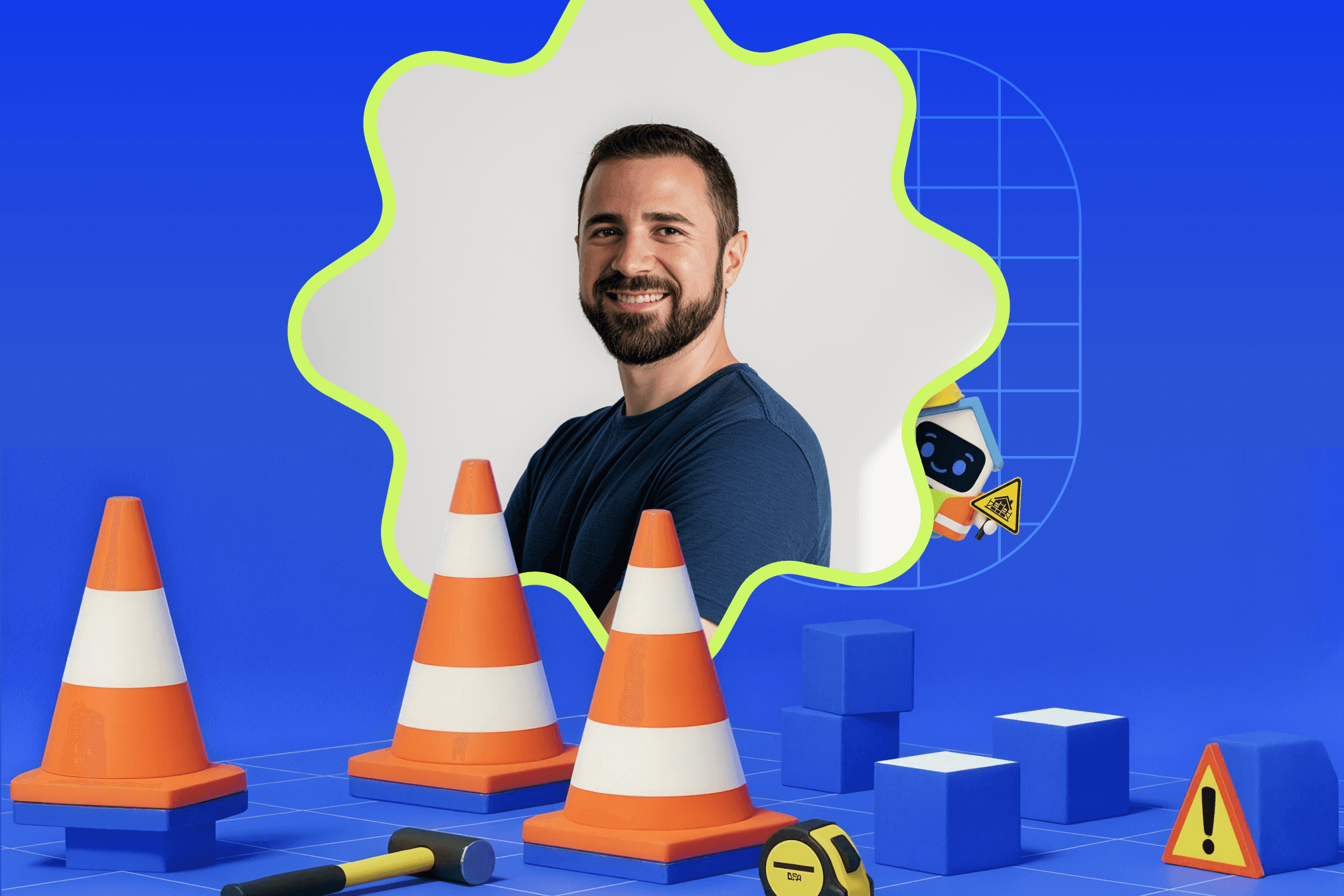
When people ask how AI fits into our engineering work, we usually start with a simple sentence from our Head of Structural Engineering, Tariq Rabadi.
Safety first, speed second.
Tariq leads structural at Spacial and thinks a lot about how AI should behave when real homes and real families are involved. We recently asked him a set of questions about what he expects from our agents and what he still expects from himself before he is comfortable signing a set.
His answers are based on where we are headed as our tools mature. They are also a clear window into how we think about responsibility at Spacial.
The three checks he makes after AI review
We asked Tariq what he would look for first after a set goes through our AI agents. His list was short and very human.
Does the overall design look reasonable.
Once AI has done its pass, he first asks whether the structure looks sound and aligns with industry standards. From roof to foundation, nothing should feel strange or out of proportion.
Is the load path clear and logical.
Next, he traces how loads travel through the building. He wants to be able to follow that path clearly on the drawings and in the calcs. If he cannot trace it, the set needs more work.
Is the drafting clean enough for a field team to follow.
Finally, he checks the quality of the drawings themselves. Lines, labels, and details have to be clear enough that a crew on site can understand what to build without guesswork.
AI can help point out where to look. These three checks are what turn that information into a set a licensed engineer is willing to sign.
How he explains AI to another engineer
We asked Tariq how he would explain our AI tools to another structural engineer.
He describes them as assistants that have “seen” many examples and can surface patterns quickly. In his mind, AI is there to do heavy scanning and repetitive checks so the engineering team can spend more time on design, judgment, and clarification.
He is clear that we only lean on AI where it has been trained and validated thoroughly on the kinds of projects we work on. Even then, the output is treated as input into his review, not as the final word. The engineer’s name, license, and responsibility stay at the center.
What he will never delegate to AI
Some tasks are not candidates for automation at all. Tariq is very specific about that.
He does not delegate:
Interpreting plan check comments and deciding how to respond.
Making final calls on edge cases or unusual conditions.
Ensuring that the overall design is reasonable and buildable.
Signing and stamping the set.
Those are areas where experience and professional judgment are essential. AI can highlight items to look at. The licensed engineer is the one who decides what happens next.
How the handoff works in his mind
For architects who are nervous about AI, we asked Tariq how he thinks about the handoff between agents and humans.
In his view, a healthy handoff looks like this.
AI agents do the initial heavy lifting, scanning drawings against rules and prior patterns and flagging anything that looks inconsistent or incomplete.
Tariq and the engineering team review those flags, decide which ones matter, and adjust the design or documentation accordingly.
A final human review checks that the set meets the same standard we would expect from a fully manual workflow before anything is stamped.
In other words, AI lets us check more things, more consistently. The engineer still decides what to accept, what to change, and what is safe to build.
What gives him peace of mind when he stamps a set
We asked what would give him confidence stamping a set that has been through AI assisted checks.
His answer starts long before any individual job. He wants to know that the AI has been trained and tested across a large number of projects, compared against human results, and refined until it behaves like a dependable part of the toolbox.
On a specific project, peace of mind comes from doing the same core checks he described earlier. Does the overall structure make sense. Do the calculations and drawings tell the same story. Are there any places where he feels the need to slow down and look again.
If those answers are not where they need to be, the set does not move forward, no matter how quickly it moved through earlier steps.
How he would explain this to a homeowner
Finally, we asked Tariq how he would describe our process to a homeowner who hears “AI” and “engineering” in the same sentence for the first time.
He keeps it very simple.
We use AI to take care of repetitive, detailed checks so that engineers can spend more time on the parts that keep you safe.
We only bring AI into a workflow once we are confident in how it behaves. Until then, everything is checked the way it always has been, by licensed engineers following standard practice. Even when AI is fully integrated, a licensed engineer still reviews the work, signs, and stands behind the set.
The benefit for homeowners and builders is that we can move faster and more efficiently, while keeping safety and quality at the center of what we do.
What this means for Spacial customers
Safety first, speed second is not a slogan for us. It is the first promise we make to the people who work with us.
We want production builders and architects to feel real gains in speed, coordination, and cost predictability. We also want city reviewers, homeowners, and field teams to trust that a Spacial stamped set has been looked at carefully by licensed engineers, with AI used in the background to make that process more thorough and reliable, not more fragile.
That combination is what we are building toward:
Licensed engineers owning judgment and stamps.
AI making it easier to spot issues early and keep projects moving.
A service that is faster, more predictable, and more affordable without cutting corners on safety.
If you want to see how this looks on a real project, we are always happy to walk through our process, from the first agent checks to the final review before a set goes out the door.