Why this conversation hit home
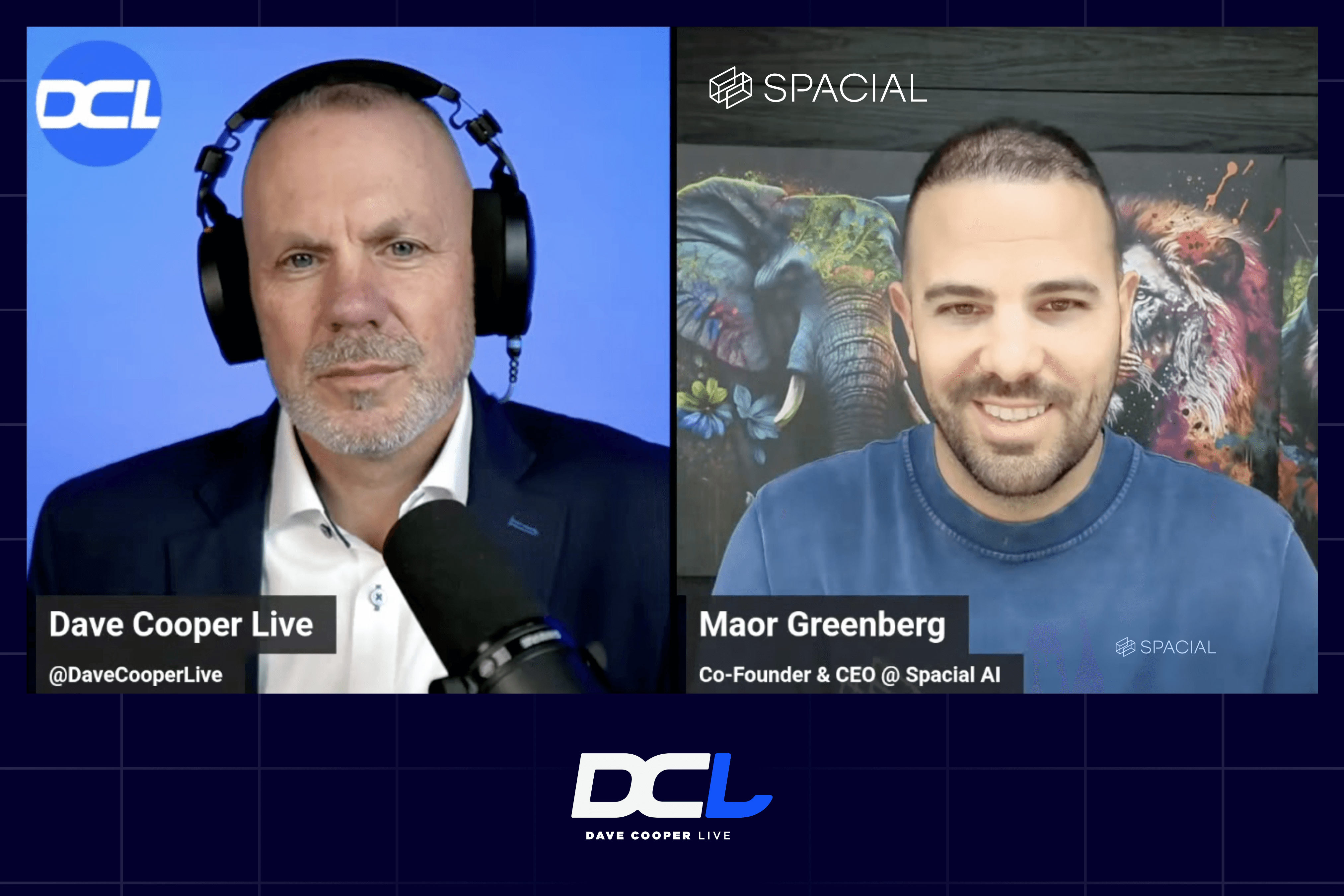
On Dave Cooper Live, Maor did not talk about AI in the abstract. He talked as a builder who spent almost 20 years living the permit and coordination pain in the field. He ran a design build company in Palo Alto, grew it past 100 employees and into the Inc. 5000 list, and still ran into the same issues over and over: beautiful architecture, then surprises from structure, MEP, and energy once construction started.
Vaulted ceilings on the architectural set, flat ceilings on the engineering set. Ducts with nowhere to go. Plumbing running into steel beams. Soffits that only appeared once the house was already framed. Even with BIM and 3D interiors, the engineering workstream lagged behind.
That frustration is what eventually became Spacial.
What AI plus engineers actually means
On the show, Dave asked a simple question: what does AI paired with licensed engineers mean in practice, before you ever see a demo.
Maor broke it down this way:
AI turns messy 2D inputs into object based 3D models of the house.
Structural and MEP agents size spans and reactions, calculate loads, place beams, joists, panels, outlets, and equipment, and assemble draft sheets that follow local permitting checklists.
Orbit, the AI intelligence inside our platform, acts like a code co-pilot inside the model. It reviews plans end to end, checks them against local and state requirements across building, planning, public works, and fire, flags conflicts and gaps, guides revisions, and helps teams understand what needs to happen next before the city ever sees the set.
Then the humans step in.
Licensed engineers review what the AI agents produce, correct anything that does not look right, finalize the calculations and notes, and only then stamp the set and clear it for submission.
On air, Maor described the goal as simple: structural, MEP, and energy under one roof, with AI doing the heavy lifting in the background and engineers owning the judgment, the stamp, and the final call.
Who Spacial serves today
Dave pressed on who actually uses the platform. The answer matters, because the pain is shared across the ecosystem.
Maor shared that most current customers are:
Design build firms that carry architecture or drafting in-house
Production and custom builders who are tired of coordinating multiple engineering vendors
Architecture firms that want a single partner for structural, MEP, and energy on their residential work
Engineering firms that want to use Spacial as their digital workbench while keeping their own stamp and standards
Today, the team actively supports California and is rolling out coverage for Texas, Arizona, Georgia, and Florida, with more jurisdictions to follow as code data and approved plan sets are added to the knowledge graph.
Why Maor talks about automation more than AI
One of Maor’s clearest points on the show was that “AI” is often just a buzzword. He prefers to talk about automation that has existed in some form for decades, then explain what is new.
The new part is not that algorithms can size a beam. The new part is:
Multiple agents can check each other’s work, including a legal agent that reads building codes directly.
Errors can be caught and corrected in 3D before the 2D sheets ever regenerate.
Approved plans and city comments can be scraped, structured, and reused as a living knowledge base instead of sitting in archives.
For Maor, this is what turns 80 hours of engineering work on a house into a process that takes a few hours of human time, with AI doing the heavy lifting in the background and licensed engineers focusing on the edge cases and judgment calls.
We are not here to replace you
Toward the end of the conversation, Dave asked the question many architects and engineers are quietly thinking: what would you say to people who worry that AI will replace their role.
Maor’s answer was direct. Spacial is not here to replace architects or engineers. It is here to enable them to do more of the work only they can do.
He shared that a typical architecture firm touches around 24 projects a year. With better automation, the same firm could handle closer to 100 projects without burning out staff, because the repetitive drafting, coordination, and code checking are handled upstream.
The stamp, the relationship with the client, and the responsibility for the final set stay with the professionals.
Where this is headed
Looking ahead, Maor described Spacial’s goal as becoming an operating system for the industry. The idea is that you start the design with Spacial and stay with the same platform and engineering partner through takeoffs, optimization, and permit submittal.
That vision is already taking shape with:
Real projects in markets like the Bay Area
Partnerships with manufacturers and builders who need panelized and off-site systems engineered at scale
A growing data set of local codes, city comments, and approved plans that makes each new project smarter
If you want to hear the full conversation, you can watch the replay of the Dave Cooper Live episode here:
https://www.linkedin.com/events/7408868017205538817/
And if you want to see how this looks on your projects, you can talk with our team here.