CONTENTS
01 · Abstract
02 · System context
03 · Technical breakdown
IBS had plenty of new tech. The most important conversations were about something older and harder: affordability.
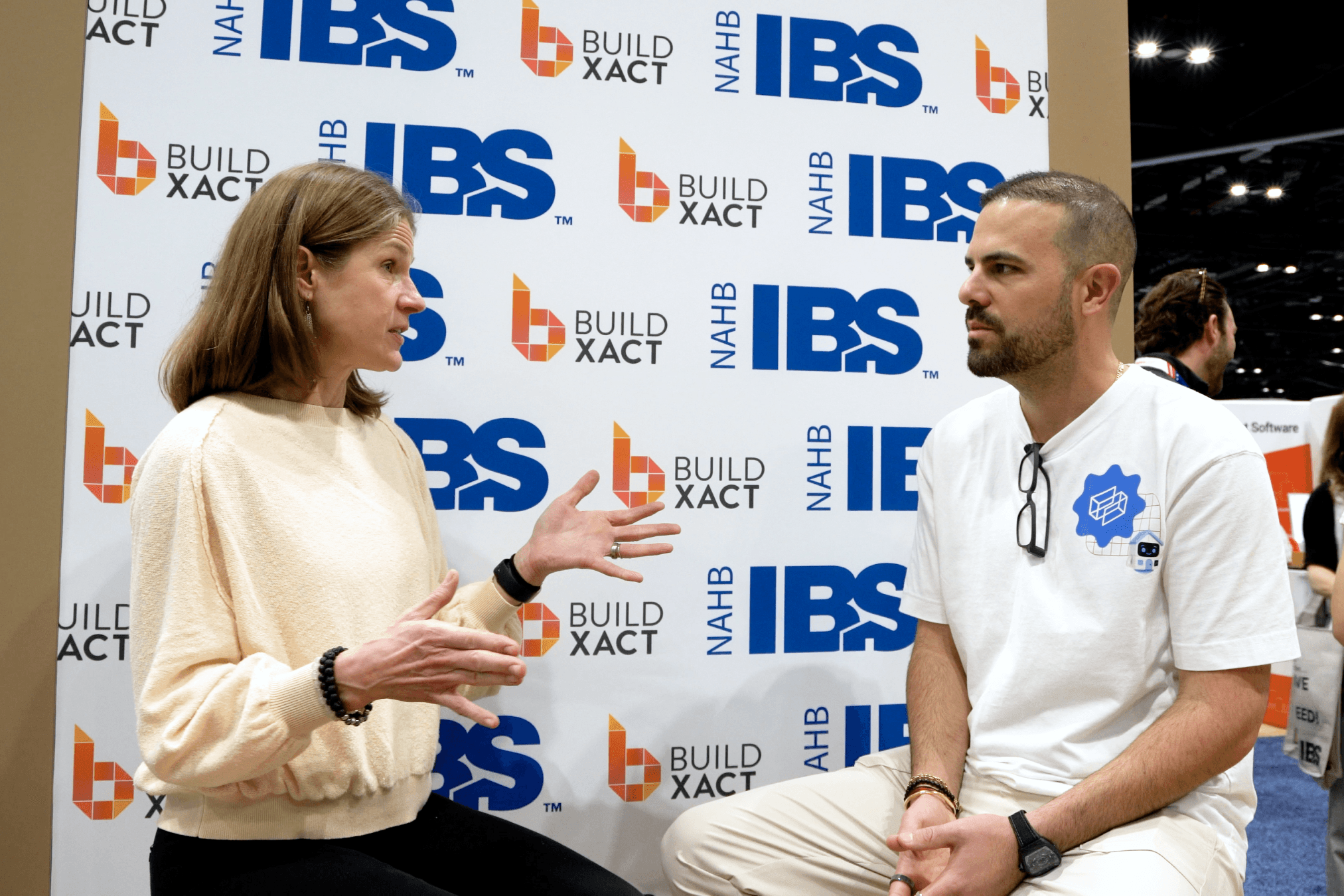
Maor Greenberg, CEO at Spacial, sat down with Jennifer Castenson, Vice President of Ambassador and Industry Partner Programs at Buildxact, to talk about what “attainable” really means right now. Her take was practical, not performative. People want to be homeowners. They do not need extra complexity. They need functional homes, wiser choices, and fewer expensive mistakes.
What Jennifer saw on the floor
Jennifer called out three trends she kept seeing:
Smarter homes and better energy visibility
More ways for homeowners to understand energy use and make better decisions over time.Better materials, better insulation, better performance
Material science and insulation improvements that lower operating costs and improve comfort.Accuracy and less waste
A strong push toward more accurate takeoffs, better automation, and fewer avoidable errors that show up as waste.
The thread connecting all three is not novelty. It is cost control.
The design misconception that keeps affordability stuck
Jennifer put it simply: attainable housing is achievable, but we have to let go of a few misconceptions.
People want ownership and financial freedom. They need function first. They need a home that works, a structure that holds up, and a package they can afford.
That points to a few repeatable moves:
Smaller footprints where they make sense
Wiser material choices
Simpler, more standardized packages that reduce custom rework
This is not about lowering the bar. It is about building with intention.
Why the affordability equation keeps tightening
We also talked about the reality that affordability pressure is coming from more than one direction. Taxes, insurance, and climate risk are rising. Financing is more expensive. Remodel demand is growing because homeowners are staying put and improving what they have.
Jennifer’s point was clear: affordability is not one decision. It is a system.
And systems respond to workflow.
Attached housing, townhomes, and the case for right sized density
One of the most practical parts of the conversation was the reminder that product type matters.
More attached housing and townhomes can change the cost structure in a meaningful way. It supports community, keeps land use efficient, and makes the build more cost effective when done well.
The direction is not luxury for luxury’s sake. It is attainable homes that people can own.
Where Spacial fits
At Spacial, we think affordability shows up in the places teams often underestimate:
Avoidable coordination loops
Late conflicts that turn into change orders
Unclear scope that creates rework
Sets that come back with comments because they are hard to verify
So we build toward one goal: fewer expensive surprises.
Spacial pairs AI with licensed engineers to deliver coordinated structural, MEP, and energy sets that are permit-ready and stamped. The faster path is not rushing. It is doing the work earlier, with a clearer workflow, so teams spend less time in back and forth and more time building.
A simple takeaway from IBS
If you want more attainable housing, start with the levers you can control:
Right size the footprint
Choose materials with intention
Reduce waste in takeoffs and procurement
Tighten coordination early so the set is easier to approve and easier to build
The best affordability strategy is the one that removes friction across the whole process, not just one line item.
INSIGHT
Use this module for editorial interpretation, important observations, or reader-facing analysis that should sit outside the main CMS narrative.
MODULE 01
Protocol
MODULE 02
Inputs
MODULE 03
Output
MODULE 04
Risk
IMPORTANT
Reserved for caveats, implementation warnings, or assumptions that change how the article should be interpreted.
65
Blueprint records available for cross-reference.